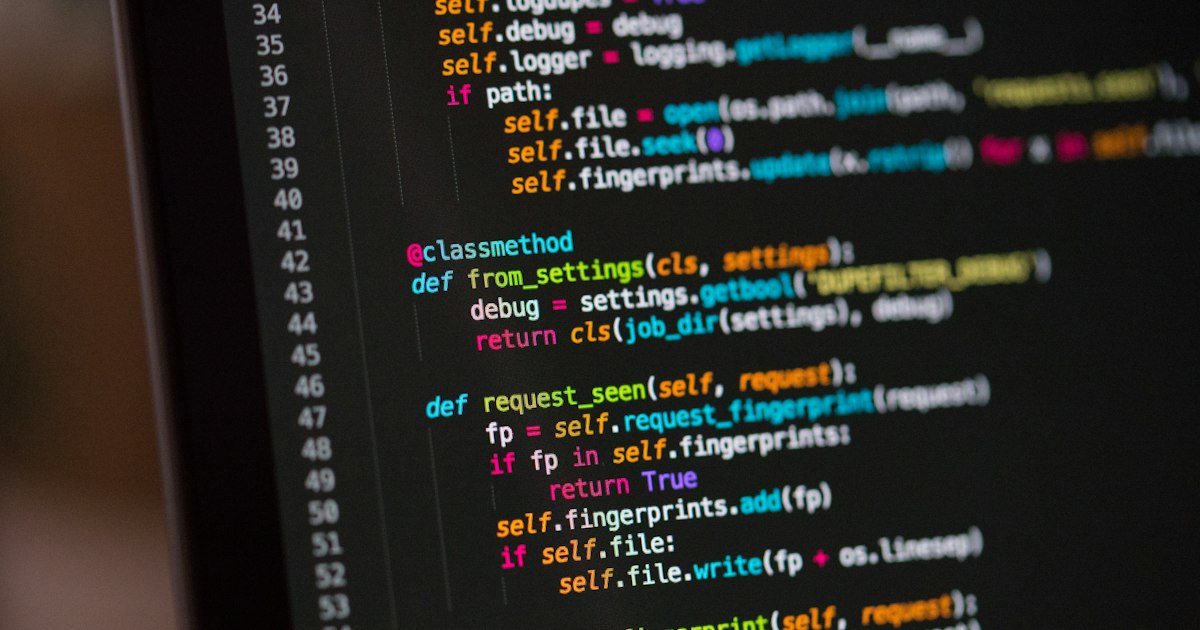
C is one of the few programming languages that can be both old and newly relevant at the same time. It is the language behind kernels, embedded firmware, runtimes, databases, drivers, cryptography libraries, and countless pieces of infrastructure that higher-level languages depend on. In 2026, learning C is not about nostalgia. It is about understanding how software talks to memory, operating systems, hardware, files, networks, and compilers.
The timing matters because C23 is now the current C standard. WG14, the international standardization working group for C, says the current C programming language standard, C23, ISO/IEC 9899, was adopted by ISO and IEC in 2024. cppreference also identifies ISO/IEC 9899:2024, known as C23, as the current revision of the C standard. At the compiler level, GCC 15 makes this even more practical by changing the default C language version from gnu17 to gnu23. Students and developers are now learning C during a real standard transition.
Why C Still Matters
C remains important because it is close to the machine without being tied to one machine. It gives programmers direct control over memory layout, object representation, pointers, linkage, compilation units, calling conventions, and system APIs. When developers use Python, JavaScript, Java, Go, Rust, or C#, there is often C somewhere underneath: a runtime, extension module, system library, operating system API, or hardware interface.
That makes C a powerful second language even for people who do not plan to write C every day. Learning C teaches why buffer sizes matter, why integer overflow can be dangerous, what a stack frame is, how dynamic allocation works, why undefined behavior is serious, how files and sockets are represented by operating systems, and why compilers can optimize code in surprising ways.
C23 Is the New Baseline
C23 does not turn C into a high-level language, but it does modernize important parts of the language and library. cppreference lists __STDC_VERSION__ as 202311L for C23. It also lists several new language features: binary integer constants, digit separators, empty initialization with ={}, attributes such as [[deprecated]], [[fallthrough]], [[maybe_unused]], and [[nodiscard]], a nullptr constant and nullptr_t type, true and false as keywords, thread_local as a keyword, and new preprocessor directives such as #elifdef, #elifndef, #warning, and #embed.
C23 also removes or deprecates some old patterns. Old-style function declarations and definitions are removed. Signed integers are now standardized around two's complement representation. Calling realloc() with a zero size becomes undefined behavior. Some older macros and headers are deprecated. For students, this is a good thing: modern C material can teach better habits instead of preserving every historical corner case from the 1970s and 1980s.
What Students Should Learn First
A strong C roadmap should start with the compilation model. C is not only syntax. You need to understand source files, headers, object files, linkers, warnings, and the standard library. Before building big projects, students should be comfortable compiling a single file, splitting code into .c and .h files, and reading compiler diagnostics.
cc -std=c23 -Wall -Wextra -pedantic main.c -o app
./app
That small command teaches several habits. Choose a standard. Turn on warnings. Treat the compiler as feedback. Build an executable. Run it from the terminal. If your compiler does not fully support -std=c23, use the closest supported mode and check the compiler documentation.
Memory Is the Core Skill
C programming is mostly about precise ownership and bounds. Students should learn arrays, pointers, structs, string handling, dynamic allocation, and lifetimes together instead of treating them as isolated topics. A pointer is not automatically an owner. An array does not carry its length. A string is a byte sequence ending in '\0'. A buffer must be large enough before data is copied into it.
The most important beginner rule is simple: every allocation needs a clear owner and a clear release point. Every function that receives a pointer should have a clear contract about whether the pointer can be null, how many elements it refers to, and whether the function reads, writes, or takes ownership. C does not enforce that contract for you, so your design, names, tests, and reviews must do the work.
C23 Library Changes Worth Knowing
C23 adds new library headers that are especially relevant for systems programmers. cppreference lists <stdbit.h> and <stdckdint.h> as new C23 headers. The first is for bit utilities, while the second supports checked integer arithmetic. C23 also adds library support for UTF-8 through char8_t, mbrtoc8(), and c8rtomb(), plus functions such as memset_explicit(), strdup(), strndup(), gmtime_r(), localtime_r(), and timespec_getres().
These additions show where C is moving: better bit manipulation, safer integer operations, more explicit text encoding support, and practical library functions that many programmers already used through platform extensions. Students should not memorize every function immediately, but they should understand why these additions matter for portable systems code.
Compilers Are Part of the Language Experience
GCC 15 is a major milestone for C developers because it changes the default language version for C compilation from gnu17 to gnu23. GCC's release notes warn that projects relying on older C behavior should add an explicit -std= flag or port their code. GCC 15 also implements more C23 features, including #embed, unsequenced and reproducible attributes, and the __STDC_VERSION__ value 202311L for C23 and GNU23.
Clang's current release notes show C23 and C2y work continuing as well. Clang notes C23 support for wN and wfN length modifiers, fixes around C23 constexpr, and extensive work on <stdbit.h> builtins, including bit counting, bit width, bit floor, bit ceil, and rotate operations. The practical lesson is that modern C is tied to compiler versions. Always verify which features your toolchain supports before using them in production.
A Practical C Learning Roadmap
Students should learn C in stages. First, learn compilation, variables, arithmetic, control flow, functions, and simple I/O. Second, learn arrays, pointers, strings, and structs. Third, learn dynamic allocation, ownership, header files, translation units, and linking. Fourth, learn file I/O, command-line arguments, error handling, and the C standard library. Fifth, learn debugging with tools such as a debugger, sanitizers, static analyzers, and compiler warnings. Sixth, learn systems topics: processes, sockets, memory mapping, atomics, threads, and platform APIs.
This order matters because C punishes vague understanding. If you try to build a network server before understanding buffer sizes and pointer lifetimes, you will write fragile code. If you learn memory and compilation carefully first, C becomes much more predictable.
Projects That Build Real Skill
Good C projects should force you to manage data and errors explicitly. Build a command-line todo database stored in a binary file. Build a small shell that runs commands and handles pipes. Build a log parser that counts events by time window. Build a fixed-size allocator. Build a simple HTTP server. Build a tiny interpreter for arithmetic expressions. Build a portable library with a header file, implementation file, tests, and documentation.
Each project should include tests and failure cases. What happens if the input file is missing? What if allocation fails? What if a line is longer than expected? What if a number overflows? C projects become valuable when they teach defensive thinking, not just syntax.
Common Mistakes to Avoid
The biggest C mistake is ignoring warnings. The second is using unsafe string and memory functions without a clear size contract. The third is assuming behavior is portable just because it worked once on one machine. The fourth is confusing a pointer with an array. The fifth is forgetting that undefined behavior can let the compiler make assumptions that break your mental model.
Another common mistake is writing C as if it were C++. C has structs, pointers, functions, and modules through files and headers; it does not have constructors, destructors, templates, exceptions, or RAII. Good C code is explicit. It usually has clear initialization functions, cleanup functions, error codes, ownership rules, and simple data structures.
What This Means for Developers
C in 2026 is still small, sharp, and unforgiving, but it is not frozen. C23 is the current standard, GCC 15 defaults to GNU23, and compiler teams are actively improving diagnostics, bit utilities, lifetime-related warnings, analyzer behavior, and standard support. That makes this a good time to learn C with modern tools instead of outdated assumptions.
If you are a student, learn C to understand the machine and the software stack beneath your favorite languages. If you are a developer, use explicit standards, strong warnings, sanitizers, and clear ownership conventions. C will not protect you automatically, but it will teach you how software really works. That is why it remains one of the most valuable languages to learn.





💬 Comments (0)
No comments yet. Be the first to share your thoughts!