Commodities — physical goods including metals (gold, silver, copper, platinum), energy (crude oil, natural gas, gasoline), and agricultural products (wheat, corn, soybeans, coffee, cotton) — are the foundational inputs of the global economy. They predate stock markets by millennia: commodity trading in rice futures was documented in Japan in the 17th century. Today, the global commodity futures market is enormous — the CME Group alone processes over 20 million contracts daily, representing trillions of dollars in notional value. For investors, commodities offer two distinct benefits: inflation protection (commodities historically rise in price during inflationary periods) and portfolio diversification (commodity returns have historically low correlation with stocks and bonds).
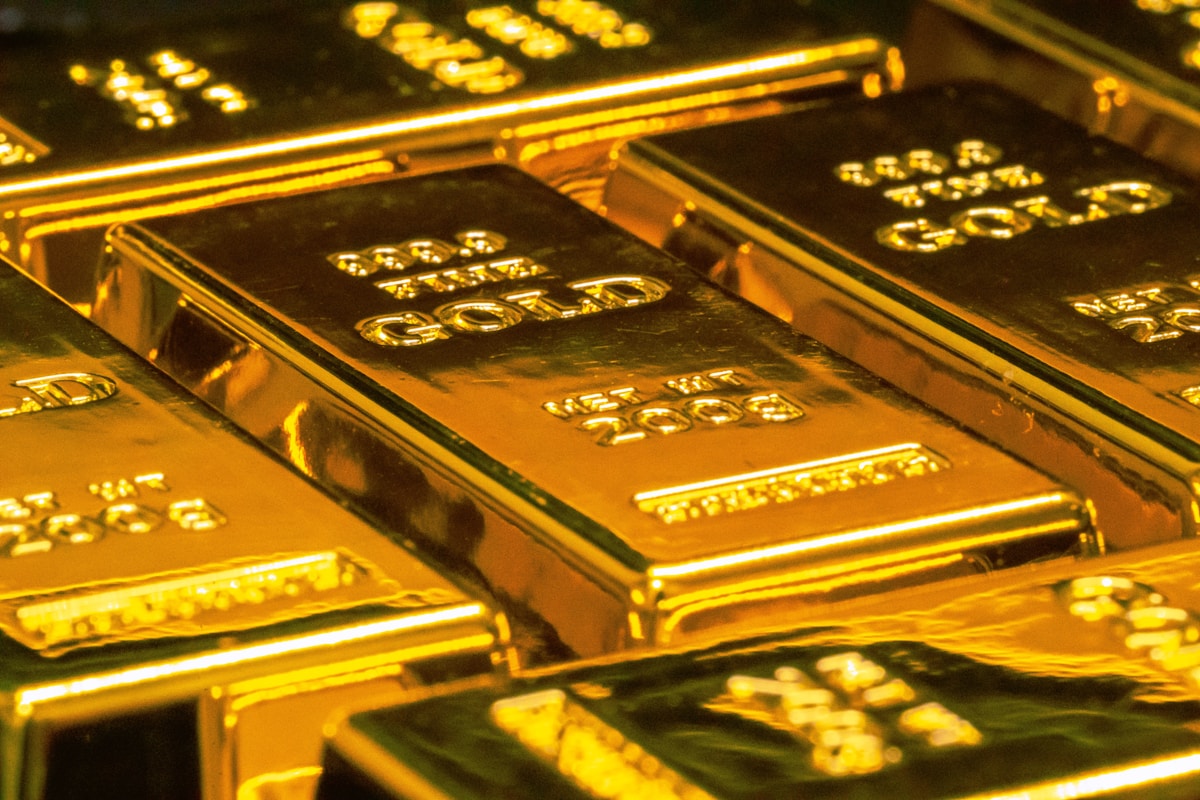
Gold: The Ultimate Safe-Haven Asset
Gold occupies a unique position in financial markets — it is simultaneously a commodity (with industrial uses in electronics, dentistry, and jewelry), a currency (the monetary standard for most of human history), and a financial asset (held by central banks as a reserve). As of 2026, central banks hold approximately 35,000 metric tons of gold reserves globally, with the US Federal Reserve holding the world's largest national gold reserve at approximately 8,133 metric tons at Fort Knox.
Gold's investment characteristics: it produces no cash flow (no dividends, no interest), has a cost to store and insure, and its "intrinsic value" is philosophically contested. Warren Buffett famously argued that gold is a purely speculative asset — its price is determined entirely by what the next buyer will pay, not by any underlying cash flow. Yet gold has maintained purchasing power over millennia while every paper currency in history has eventually been debased.
When gold outperforms: High inflation (gold rose 35% in 1979 as CPI hit 13.3%), geopolitical crisis (gold hit all-time highs above $3,000/oz in 2024 amid Middle East tensions and US fiscal concerns), negative real interest rates (when Treasury yields are below inflation, gold becomes competitive since bonds are also yielding negative real returns), and dollar weakness (gold is priced in dollars globally — a weaker dollar makes gold cheaper for foreign buyers, supporting demand).
How to access gold: Physical gold (coins, bars) — direct ownership but with storage/insurance costs. SPDR Gold Trust (GLD) — the world's largest gold ETF, holding physical gold in trust, with 0.40% expense ratio. iShares Gold Trust (IAU) — similar but lower expense ratio (0.25%). Gold mining stocks (GDX ETF) — leveraged exposure to gold price with added operational risk. Gold futures at COMEX — for sophisticated investors comfortable with margin requirements and rolling contracts.
Crude Oil: The World's Most Traded Commodity
Crude oil is the most important commodity in the global economy — approximately 100 million barrels are produced and consumed daily. Two primary benchmark grades dominate: West Texas Intermediate (WTI), the US benchmark priced at Cushing, Oklahoma, and Brent Crude, the international benchmark priced in the North Sea. The spread between WTI and Brent reflects transportation costs, quality differences, and regional supply-demand dynamics.
Oil price is determined by the interaction of OPEC+ production decisions, US shale production responsiveness, global economic growth (which drives fuel and petrochemical demand), geopolitical risk (Middle East tensions can spike oil prices rapidly), and the energy transition's long-term demand trajectory. The 2020 COVID crash saw WTI futures briefly trade at negative $37/barrel in April 2020 — an unprecedented event caused by storage capacity running out at the Cushing delivery point as demand collapsed. This highlighted the crucial concept of contango versus backwardation in futures markets.
Contango and Backwardation: Commodity futures prices for delivery in future months may be higher (contango) or lower (backwardation) than the current spot price. In contango — the normal state for oil when markets expect future scarcity — investors holding long futures positions lose money when rolling from an expiring contract to the next month's contract at a higher price. This "roll yield" drag is why commodity ETFs that hold futures (like USO, the United States Oil Fund) have dramatically underperformed the spot oil price over time. USO lost approximately 90% of its value from 2008 to 2020 while spot oil prices recovered. Understanding contango is essential before investing in futures-based commodity ETFs.
Agricultural Commodities: Food as an Asset Class
Agricultural commodities — wheat, corn, soybeans, coffee, sugar, cotton, cattle, hogs — are traded on the Chicago Board of Trade (CBOT, part of CME Group) and the Intercontinental Exchange (ICE). Agricultural prices are driven by weather (droughts, floods), planting and harvest cycles, export demand (China's grain purchases move global agricultural markets), biofuel mandates (corn-to-ethanol conversion creates a floor on corn prices), and geopolitical disruptions (Russia-Ukraine conflict disrupted 30% of global wheat trade in 2022).
The Rogers International Commodity Index and the Bloomberg Commodity Index are the primary broad commodity benchmarks. The iShares Bloomberg Roll Select Commodity Strategy ETF (CMDY) and Invesco DB Commodity Index Tracking Fund (DBC) provide diversified commodity exposure with roll optimization strategies designed to minimize contango drag.
Commodities in Portfolio Construction
Academic research (Gorton and Rouwenhorst, 2006, Yale ICF Working Paper) documents that diversified commodity futures portfolios have historically delivered equity-like returns with negative correlation to stocks and bonds over long periods — making them valuable portfolio diversifiers. A 5–15% allocation to diversified commodities (through a roll-optimized ETF like CMDY or PDBC) can meaningfully reduce portfolio volatility and improve inflation-adjusted returns without reducing expected returns. The key is diversification across commodity sectors rather than concentration in any single commodity, and using roll-optimized funds to minimize the contango drag that has destroyed returns for naive commodity investors.
Sources & Trading Risk Note
This article is for educational purposes only and is not financial advice. Trading involves risk, leveraged products can amplify losses, and market rules or evaluation terms can change. Verify current contract specs, exchange rules, and firm-specific terms before trading.




💬 Comments (0)
No comments yet. Be the first to share your thoughts!