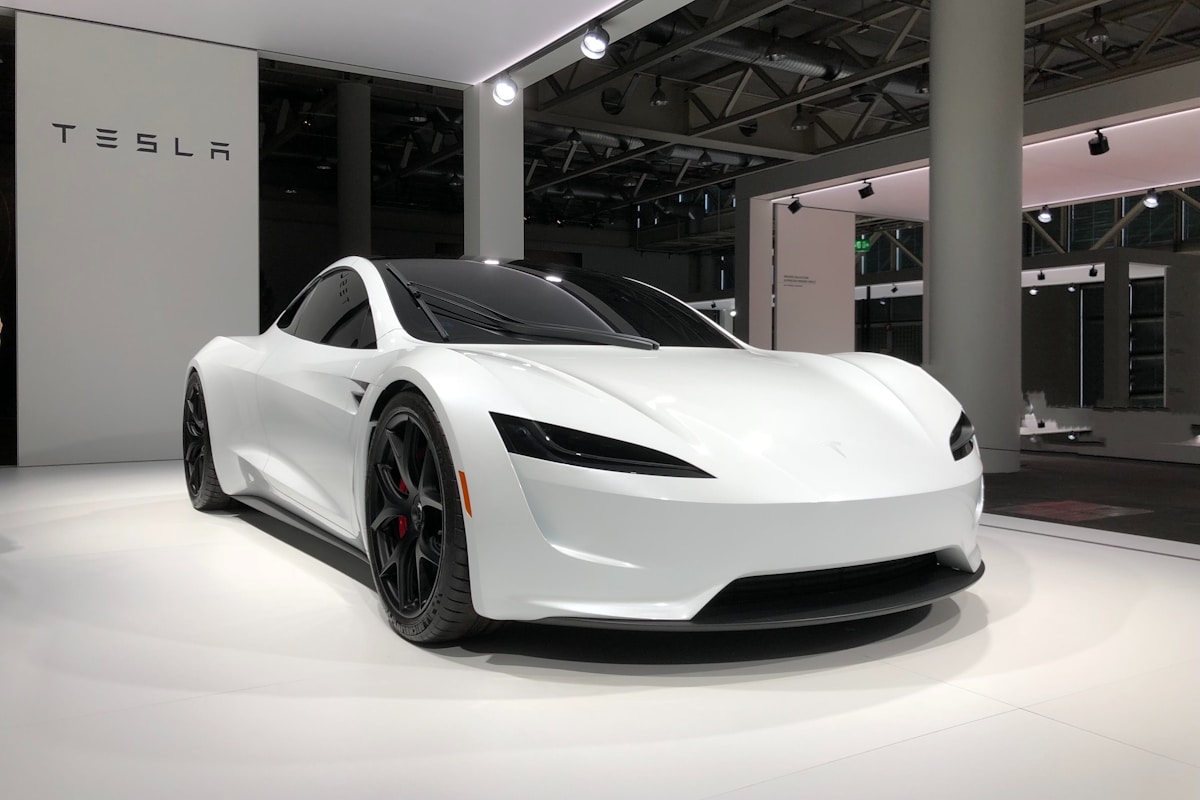
Tesla's Full Self-Driving system crossed a milestone in early 2026 that its competitors had been working toward for nearly a decade: the company announced that cumulative FSD miles driven globally had surpassed 3 billion, with the current Version 13 system demonstrating meaningful autonomous capability on urban roads without driver intervention for multi-mile stretches. This does not mean Tesla has achieved full autonomy — the system still requires driver monitoring and produces disengagements — but the trajectory of improvement is now steep enough that industry observers who once dismissed FSD as vaporware are taking it seriously.
Meanwhile, the Cybercab — Tesla's purpose-built autonomous robotaxi vehicle without a steering wheel or pedals — is scheduled to enter production in the second half of 2026. If Tesla successfully launches Cybercab and the FSD network that supports it, it will validate one of the most ambitious technology and business bets in the history of the automotive industry. If it stumbles, it will raise fundamental questions about whether camera-only autonomous driving can reach the reliability standard required for commercial robotaxi operations without human backup drivers. This guide covers the current state of Tesla FSD v13, the Cybercab timeline, and what it all means for the autonomous vehicle industry.
What Changed in FSD Version 13
FSD Version 13 represents Tesla's most significant architectural update to the Full Self-Driving software since the transition to the end-to-end neural network approach in Version 12. In V12, Tesla replaced tens of thousands of lines of human-written C++ rules (the "if this, do that" code that defined how the car should respond to specific detected objects) with a single end-to-end neural network trained on billions of human driving clips that outputs steering and acceleration commands directly from camera inputs.
V13 builds on this foundation with three key improvements. First, the neural network itself is larger — roughly three to five times more parameters than the V12 network — allowing it to learn more subtle and complex driving behaviors from the training data. Second, the training data pipeline has been scaled dramatically. Tesla's fleet of over 6 million vehicles with FSD hardware equipped generates an enormous volume of real-world driving data, including specially curated "intervention clips" where human drivers had to take control of the car — precisely the situations where the current model is making mistakes, used to train the next version to handle those situations correctly.
Third, V13 introduces improved handling of what Tesla calls "rare but important" scenarios — unusual road geometries, ambiguous traffic control situations, emergency vehicle interactions, and construction zones that the previous model handled poorly because they appeared infrequently in the training data. Tesla's data collection team specifically sought out and recorded these edge cases to build the V13 training set.
Safety Data: What the Numbers Actually Show
Tesla publishes a quarterly Vehicle Safety Report comparing the crash rate per million miles driven for Autopilot (the basic traffic-aware cruise control and lane keeping system) versus the U.S. average. The most recent report shows Tesla vehicles on Autopilot involved in a crash every 7.89 million miles, versus the U.S. average of approximately 1 crash per 670,000 miles — an apparent 11x safety advantage.
However, these numbers require careful interpretation. The Autopilot comparison is not the same as FSD autonomy — Autopilot is engaged primarily on highways under favorable conditions, which are inherently safer driving environments than city streets. More relevant are the FSD-specific intervention rates: how often per mile does a human driver need to take control because the system made an error or was about to make one?
Tesla does not publicly disclose FSD intervention rates with the granularity that California's Department of Motor Vehicles requires from permitted autonomous vehicle testing companies like Waymo and Cruise. This makes direct comparisons difficult. What Tesla owners report via community tracking tools like TeslaFi and community forums suggests V13 demonstrates meaningfully fewer interventions per 100 miles than V12 in most driving conditions — a trend that, if maintained, suggests the end-to-end approach is scaling as intended.
The Cybercab: Tesla's Robotaxi Bet
The Tesla Cybercab — unveiled at the "We, Robot" event in October 2024 — is a two-passenger vehicle designed from the ground up for autonomous operation. It has no steering wheel, no pedals, and no provision for a human driver. The production version features inductive wireless charging (the car drives over a charging pad embedded in the ground), a minimalist interior with two reclining seats, and a starting price target of under $30,000 to allow Tesla to deploy a large fleet economically.
Cybercab production is scheduled to begin at the Gigafactory Texas facility in the second half of 2026. Elon Musk has stated that Tesla will initially operate the Cybercab fleet as a company-owned robotaxi service — similar to how Waymo operates its fleet — before eventually opening the Tesla Network to allow individual Cybercab owners to earn revenue by adding their vehicles to the platform when not in personal use.
The economics Tesla projects for the Cybercab — if the autonomy works — are compelling. Musk has suggested a cost per mile for the Tesla Network robotaxi service of approximately $0.20, versus Uber's current cost to drivers of approximately $1.50 to $2.00 per mile. At $0.20 per mile for consumers, robotaxi trips would be cheaper than owning and operating a personal vehicle in most U.S. cities. At that price point, the addressable market is enormous — the entire U.S. transportation market, not just ride-sharing.
Tesla vs Waymo: The Fundamental Technology Debate
The most consequential technical debate in autonomous vehicles is whether Tesla's camera-only approach (no lidar, no radar beyond a front radar) can match or exceed the safety of Waymo's sensor-fusion approach (lidar + cameras + radar), or whether cameras alone are fundamentally insufficient for the reliability standard required for commercial autonomous operation.
Tesla's argument: Humans drive using only biological cameras (eyes). A sufficiently large neural network trained on enough human driving data should be able to replicate and exceed human driving performance using the same sensor modalities humans use. Lidar is expensive, produces sparse data in adverse weather, and is an unnecessary constraint on the scalability of autonomous vehicle deployment. The path to full autonomy is data scale and better neural networks, not better sensors.
Waymo's argument: Lidar provides precise 3D geometric information about the environment that cameras fundamentally cannot — particularly in low-light, fog, and rain conditions. A camera can misinterpret a shadow as a pedestrian or fail to detect a dark object at night; lidar does not make these mistakes. The additional cost of lidar ($1,000 to $5,000 per vehicle at scale) is trivially small relative to the safety benefit, and the safety margin it provides is essential for commercial operation at the reliability level required by regulators and the public.
As of mid-2026, Waymo is operating a fully commercial robotaxi service in San Francisco, Phoenix, Los Angeles, and Austin — with no safety drivers in the vehicle — having logged over 20 million commercial trips without a serious injury attributable to the autonomous system. Tesla's FSD still requires a licensed driver to be present and monitoring. The gap between a system requiring human monitoring and a fully autonomous commercial service is enormous — Waymo has crossed it; Tesla has not yet.
Regulatory Landscape for Autonomous Vehicles
Regulatory approval is the gating factor for commercial autonomous vehicle deployment in most U.S. jurisdictions. California's DMV has the most comprehensive AV regulatory framework, requiring companies to report disengagements publicly and to apply for staged permits as autonomy levels increase — from testing with a safety driver to driverless testing to commercial deployment.
Waymo holds a commercial deployment permit in California that allows it to charge passengers for fully driverless rides. Tesla does not hold an equivalent permit and would need to complete California's multi-stage approval process before operating Cybercab commercially without a safety driver present in the vehicle.
Federal regulation of autonomous vehicles remains fragmented. The NHTSA has authority over vehicle safety standards but has not yet established a comprehensive federal AV deployment framework. Several bills have been introduced in Congress to create uniform national AV standards, but none has passed as of mid-2026. This regulatory uncertainty means that commercial robotaxi operations will continue to be governed state-by-state, with each state developing its own approval process — a significant operational and legal complexity for any company attempting national deployment.
What This Means for Tesla's Valuation
A significant portion of Tesla's market capitalization — estimates range from 30 to 60 percent depending on the analyst — is attributed to the optionality value of FSD and the Cybercab network succeeding commercially. At a $700 billion market cap with approximately $100 billion in annual auto revenue, the core business trades at a significant premium to traditional automakers. That premium reflects the market's expectation that Tesla will eventually operate a profitable software and robotaxi business at massive scale.
The Cybercab launch in late 2026 will be a critical valuation catalyst — either validating Tesla's autonomy premium or forcing a fundamental reassessment. If the Cybercab launches on schedule, receives regulatory approval, and operates commercially without safety drivers in a meaningful number of markets, Tesla's autonomous vehicle bull case will receive major validation. If launch is delayed, regulatory approval is denied, or the system requires safety drivers for longer than expected, the valuation premium will compress.
The Bottom Line
FSD Version 13 represents the most capable version of Tesla's autonomous driving software to date, with the end-to-end neural network approach demonstrating rapid improvement as the training dataset and model scale increase. The Cybercab launch is the highest-stakes product announcement in Tesla's history — a vehicle designed to prove that camera-only autonomy can achieve commercial deployment without human backup drivers.
Whether Tesla or Waymo's approach ultimately wins the autonomy race — cameras-only versus sensor fusion — will have profound implications for the entire automotive and transportation industry. The answer may not be either/or: Waymo's approach may be necessary for the highest-reliability commercial operations, while Tesla's lower-cost approach may dominate the personal vehicle autonomy market. Both markets are enormous. The next 18 months will provide critical evidence about which trajectory each company is on.
Official Resources
For further research, the following official sources provide authoritative information on the topics covered in this article.
- Tesla Investor Relations — Official Tesla financial reports and FSD deployment data
- NHTSA Automated Vehicles — Official U.S. federal autonomous vehicle safety regulations and data
- SAE Automation Levels — Official SAE J3016 standard defining Levels 0–5 of driving automation
Sources & Accuracy Note
Developer tooling, AI models, framework releases, benchmarks, and security advisories move quickly. Verify version numbers, release notes, and migration steps against the original project or vendor documentation before making production decisions.
💬 Comments (0)
No comments yet. Be the first to share your thoughts!