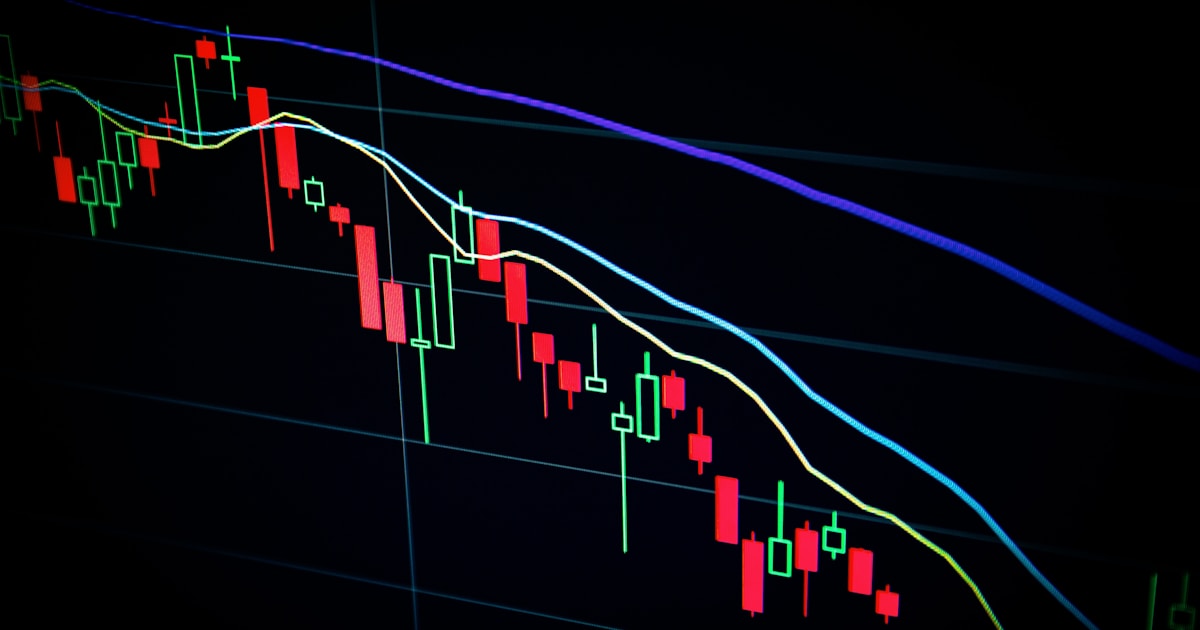
Indian stock markets entered 2026 with cautious optimism — and have spent most of the year grinding lower. The Sensex fell 479 points in a single session recently, dragging the Nifty 50 back to the 23,914 level, and the broader trend on Dalal Street has been decidedly muted. What was supposed to be a recovery year has turned into a test of patience for millions of Indian investors.
The stagnation isn't random. It's the result of seven distinct forces — some domestic, some global — that are all hitting Indian markets simultaneously. Here's a clear breakdown of each one, why it matters, and what experts are saying about the path forward.
1. Massive FII Outflows — India Is "Not Entitled" to Foreign Money
The single biggest headwind for Indian equities in 2026 has been the relentless selling by Foreign Institutional Investors (FIIs). FII outflows have been running at multi-year highs, and the selling shows no signs of slowing. Foreign investors are pulling capital out of India and redirecting it to markets offering better valuations, higher yields, or lower risk.
Market analysts have been blunt in their assessment. As one prominent strategist noted, India is "not entitled to FII flows" — a reminder that foreign capital goes where returns are best on a risk-adjusted basis, and India's premium valuations relative to emerging market peers have made it a source of funds rather than a destination. With the Nifty trading at elevated price-to-earnings ratios compared to markets like Brazil, South Korea, and now Taiwan, FIIs are finding better value elsewhere.
The impact is direct: when FIIs sell, they create persistent selling pressure that domestic institutional investors (DIIs) and retail buyers have struggled to absorb. Every rally gets sold into, creating the frustrating "stuck" pattern that defines the current market.
2. Taiwan Displaces India from Top 5 Global Markets
In a symbolic but meaningful shift, Taiwan's stock market has displaced India from the top 5 global markets by market capitalization. Fueled by the AI semiconductor boom and the dominance of TSMC, Taiwan has attracted massive capital inflows while India has seen outflows. This displacement matters beyond bragging rights — global index rebalancing and passive fund allocations are partly driven by market cap rankings, meaning India's demotion could trigger additional mechanical selling.
For Indian investors who grew accustomed to their market being the world's growth story, this is a wake-up call. Capital flows follow performance, and India's underperformance relative to tech-heavy markets like Taiwan and the US has created a self-reinforcing cycle of outflows.
3. US-Iran Military Tensions Are Crushing Global Sentiment
The US-Iran military strikes have created a risk-off environment across global markets, and India is particularly vulnerable. Unlike the US, which is a net energy exporter, India is a massive net oil importer — roughly 85% of its crude oil is imported. Any spike in oil prices from Middle East tensions directly hits India's current account deficit, inflation, and corporate margins.
Prime Minister Modi has explicitly warned that the Iran war poses severe risks to India, urging citizens to cut fuel consumption and reduce gold purchases. When the Prime Minister is publicly asking the population to consume less, it signals the severity of the economic threat. Oil price volatility from the Iran conflict is acting as a tax on the Indian economy, draining consumer purchasing power and squeezing corporate profits — both of which are negative for equity valuations.
4. Zerodha's Nithin Kamath Warns of a "Terrible Year Ahead"
Nithin Kamath, the founder of Zerodha — India's largest retail brokerage — doesn't mince words. He has publicly warned of a "terrible year ahead" for Indian markets, citing the possibility of RBI rate hikes amid inflation stoked by the US-Iran war. When the most visible figure in Indian retail trading tells his millions of users to brace for pain, sentiment takes a measurable hit.
Kamath's concern centers on a potential policy error: if the RBI is forced to hike rates to combat imported inflation (from oil) at a time when domestic growth is already slowing, it could create a stagflationary environment — the worst of both worlds for equity markets. Higher rates would compress valuations (lower P/E multiples), while slower growth would reduce earnings. Experts broadly see low scope for a trend reversal in the next 1–2 quarters, suggesting the stagnation could persist through at least the third quarter of 2026.
5. Gold and Silver Import Duty Hikes — Defensive Policy Signals
India's decision to hike gold and silver import duties is being read by markets as a defensive signal. The government is trying to reduce the outflow of dollars spent on bullion imports, which worsens the current account deficit and puts pressure on the rupee. While the duty hike is aimed at macroeconomic stability, it tells equity investors something uncomfortable: the government is worried enough about capital outflows and currency stability to take aggressive action.
The rupee has been under sustained pressure, and bullion import duty changes are just one tool in the government's currency defense toolkit. A weakening rupee makes FII returns in dollar terms even worse, creating another reason for foreign investors to sell Indian equities. It's a vicious cycle — FII outflows weaken the rupee, which drives more FII outflows.
6. STT Hike Biting Into Market Volumes
The government's increase in Securities Transaction Tax (STT) is having a measurable impact on market activity. The STT hike was specifically targeted at index options volumes, which had exploded as millions of retail traders piled into zero-days-to-expiry (0DTE) options. While the stated goal was to cool speculative excess and protect retail investors from losses, the practical effect has been a drop in trading volumes and liquidity.
Lower volumes mean lower liquidity, which means wider bid-ask spreads and more volatile price action. For institutional investors who need deep liquidity to execute large orders, the reduced volumes make Indian markets less attractive. The STT hike has effectively cooled the very volatility and activity that made Indian derivatives markets one of the most liquid in the world — a change that some argue has gone too far.
7. India's Mining Industry Needs Reform
India's mining industry is calling for major reform, and the lack of progress is holding back a sector that could be a significant growth driver. India has vast mineral reserves — coal, iron ore, bauxite, rare earths — but regulatory bottlenecks, land acquisition challenges, environmental clearances, and policy uncertainty have kept the sector underperforming its potential.
For the stock market, mining sector reform matters because it's linked to the broader investment cycle. Infrastructure spending, manufacturing growth (Make in India), and energy security all depend on a functioning mining ecosystem. The market's stagnation partly reflects investor skepticism that structural reforms will happen fast enough to unlock India's next growth phase.
What the Trend on Dalal Street Looks Like
The dominant pattern on Dalal Street is what traders call a "muted" or "tepid" trend — markets that go nowhere with conviction. Every rally attempt gets sold by FIIs, and every dip gets bought by DIIs and retail investors. The result is a market that churns sideways, frustrating both bulls and bears. Breadth has been weak, with midcap and smallcap indices underperforming the Nifty 50, suggesting risk appetite is shrinking.
Volume patterns confirm the lackluster sentiment. Delivery-based trading — a proxy for long-term conviction — has been declining relative to speculative intraday activity. This tells us that long-term investors are sitting on the sidelines, waiting for clarity on geopolitics, interest rates, and earnings before committing capital.
When Could the Stagnation End?
Most market strategists agree that a sustained reversal requires at least two of the following catalysts:
- FII flows turning positive — this requires either a correction in US/Taiwan markets that redirects capital, or Indian valuations becoming cheap enough to attract bargain hunters
- Oil price stabilization — a resolution or de-escalation of US-Iran tensions would immediately benefit India's macro outlook
- RBI rate cuts — if inflation cools enough for the RBI to cut rates, it would re-rate equity valuations higher
- Earnings acceleration — corporate earnings growth needs to catch up to elevated valuations
- Rupee stabilization — a stable or strengthening rupee would improve FII return calculations
Until at least two of these catalysts materialize, experts see low scope for a trend reversal and expect the grinding, range-bound action to continue for at least 1–2 more quarters.
What Should Indian Investors Do?
Stagnation isn't the same as a crash. Markets that go sideways for extended periods are actually building bases for future moves — the question is whether the eventual breakout is up or down. For long-term investors with a 3–5 year horizon, the current environment offers opportunities in select sectors (defense, infrastructure, pharma) where earnings visibility is higher.
For traders, the tepid trend demands a different approach: tighter position sizes, faster profit-taking, and a willingness to sit in cash when setups aren't clear. The worst thing you can do in a choppy market is trade with the same aggression you'd use in a trending market.
Sources & Trading Risk Note
This article is for educational purposes only and is not financial advice. Trading involves risk, leveraged products can amplify losses, and market rules or evaluation terms can change. Verify current contract specs, exchange rules, and firm-specific terms before trading.


💬 Comments (0)
No comments yet. Be the first to share your thoughts!